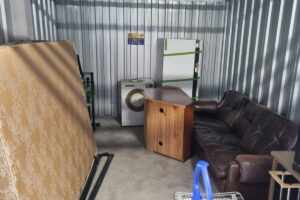
House clearances can be a daunting task. You might be getting a home ready for sale, helping a parent downsize, handing back a rental, or clearing a deceased estate while you are still grieving. The work is physical, it is emotional, and there is usually a date you have to meet.
Red Rabbit Rubbish Removal handles house clearances right across Melbourne. This guide covers what a clearance involves, what affects the price, how long it takes, and what happens to everything once it leaves the property.

What a house clearance actually involves
A house clearance is not the same as a standard rubbish run. A rubbish run takes a pile you have already made. A clearance means working through the property room by room and emptying it.
A full clearance usually covers:
- Furniture, beds and mattresses
- Whitegoods and appliances
- Electrical items and e-waste
- Clothing, linen and household goods
- Garage, shed and outdoor contents
- General household rubbish
Everything is loaded from inside the home, so you are not dragging furniture out to the kerb yourself. Most clearances are finished in a single visit.
House clearance, junk removal or a skip bin
People use these terms as though they mean the same thing. They do not, and picking the wrong one costs you time.
A skip bin is delivered and left with you. You do the sorting, the lifting and the loading. It works if you have a driveway, a few free days, and someone to help. It does not work well for a whole house.
Junk removal is a team collecting a pile you have already sorted. Good when the hard part is done, and you just need it gone.
A house clearance is the whole job. We sort, lift, load, and clear the property so it is empty and ready for the next stage. This is what you want when the home has to be cleared by a certain date, or when doing it yourself is not realistic.
For a deceased estate clearance, a full clearance is almost always the right call.
How long does a house clearance take?
On the day, most Melbourne house clearances take somewhere between a few hours and a full day. What changes that:
- The size of the home and how much is in it
- Access. Stairs, narrow streets, walk-up units and shared driveways all add time
- Whether items still need sorting or are ready to go
- Whether anything needs dismantling, like a shed or built-in shelving
The longest part is the preparation. Give yourself one to two weeks if your deadline allows it.
A one- to two-week plan that works
Days 1–2: Start with the volume rooms. Garage, shed, spare rooms, linen cupboards and outdoor areas.
Days 3–5: Refine your keep, donate and recycle piles. Keep one small box for anything you cannot decide on yet.
Days 6–7: Book rubbish removal for bulky items and general waste
Days 8–10: Clean and finish. Windows, floors, empty cupboards.
Days 11–14: Buffer, because something always comes up.
If you have less time, compress it. The one thing worth doing early is getting the bulky items out. A house feels workable the moment the furniture is gone.
What does a house clearance cost in Melbourne?
No one can give you a real figure over the phone without knowing what is in the house. Anyone who does is guessing.
Price comes down to four things:
- Volume. How much actually leaves, measured by the space it takes up in the truck.
- What it is. Mattresses, tyres and e-waste carry their own disposal fees.
- Access. A ground floor home with a driveway is quicker than a second floor unit with a shared stairwell.
- Sorting. A property that has already been sorted is faster to clear than one that has not.
Red Rabbit quotes on site, and the quote is free with no obligation. You will know the price before anyone starts loading.
What happens to your belongings
This is the question people ask most, especially with a deceased estate. Nobody wants a lifetime of belongings tipped straight into landfill.
Items are separated as they are loaded:
- Donated. Furniture, clothing and household goods still in good condition go on to be reused where suitable.
- Recycled. Metal, e-waste, cardboard and clean timber are sorted for recycling.
- Disposed of. Whatever is broken, unsafe or contaminated goes to a licensed facility.
If there is anything you want set aside, say so before the truck arrives. Once it is loaded, it is much harder to pull back out.

The hard parts, and how to get through them
1. Deciding what to let go of
Sorting through someone’s belongings brings up a lot, particularly in a deceased estate where nearly every item carries a memory. Give yourself time and take breaks.
Two things help. Set aside the mementos that matter early, so you are not making that decision under pressure at the end. And keep one small box for anything you cannot decide on yet. Put it aside, keep moving, and come back to it with a clearer head.
There is no prize for doing this quickly.
2. Not having the time
Between work and family, most people do not have a spare weekend to empty a house, let alone the trailer, and the help to do it.
That is the part we take off your hands. Sorting, lifting, loading, and disposal are handled in one visit, so you can get on with everything else a move or an estate involves.
3. Bulky and awkward items
Sofas, mattresses, wardrobes, whitegoods, old desks and shelving are what slow everyone down. They need two people, a truck, and a bit of care getting through hallways and doorways without marking the walls.
That is routine work for our team, and it is the single biggest time saver in a clearance.
4. Getting rid of it responsibly
Tip fees, e-waste rules, and what can actually go in a kerbside bin all trip people up. It is one of the main reasons half-cleared homes sit with piles in the driveway for weeks.
We sort as we load, and send what can be reused or recycled in that direction rather than straight to landfill.
5. Keeping the cost sensible
Two things keep a clearance cheaper. Decide before we arrive what is staying, so you are not paying to move things twice. And put everything that is going into one accessible area if you are able to.
Seven tips for a smoother house clearance
- Start with the deadline, not the stuff. Write down the settlement, auction, inspection, or handover date. Every other decision works backwards from it.
- Work in four zones. Keep, donate, recycle, dispose. Labelled piles are enough. You do not need storage tubs.
- Start with the volume rooms. Garage, shed, spare rooms, and outdoor areas hold the most bulk. Clearing them early makes the rest feel manageable.
- Sort by category once the bulk is gone. Clothing, books, paperwork, kitchen items. It is faster than going room by room a second time.
- Keep donation and recycling separate. One bag of general rubbish in a donation pile and the whole lot gets rejected.
- Take breaks. This is heavy work in both senses. Rushing is how things get damaged and how the wrong items end up thrown out.
- Ask for help early. Especially with a deceased estate. Family, friends, or a team who does this every week.
Clearing goods a tenant has left behind
If you are a landlord, an agent or a property manager, goods left behind after a tenancy have their own rules and you cannot simply throw them out. Tenants Victoria has practical guidance on moving out, final inspections and goods left behind, which is the right place to start before you clear anything.
Once you know where you stand, we can clear the property in one visit and have it ready for the next tenant.

Common questions about house clearance in Melbourne
How does a house clearance work?
You book a time, we come to the property and quote on site, then the team works through the home room by room, loading everything that is going. Items are sorted for donation, recycling or disposal as they are loaded. Most homes are cleared in one visit.
How long does a full house clearance take?
Most Melbourne homes take between a few hours and a full day, depending on size, volume and access. The preparation is what takes longer. Allow one to two weeks if your deadline lets you.
How much does a house clearance cost in Melbourne?
It depends on volume, the type of items, access and how much sorting is needed. Red Rabbit quotes on site so you get a real figure rather than a guess, and the quote is free.
What is the difference between a house clearance and junk removal?
Junk removal collects a pile you have already sorted. A house clearance is the whole property, sorted, lifted and loaded by us, and left empty.
What happens to the items you take away?
Anything usable is directed to donation where suitable, recyclable material is sorted for recycling, and the rest goes to a licensed disposal facility.
Do you clear deceased estates?
Yes. It is a large part of what we do, and we work carefully and without rushing families.
Which parts of Melbourne do you cover?
Red Rabbit works right across Melbourne, including the northern and eastern suburbs, the CBD and surrounds.
Are You Ready For Your House Clearance?
House clearances can be challenging, but with the right approach and support, you can navigate the process with ease. Red Rabbit Rubbish Removal is here to assist you every step of the way, providing eco-friendly, efficient, and affordable house clearance services in Melbourne.
Contact us today to see how we can help you with your house clearance needs.